
Montessori vs Play-Based Preschool: Which Approach Suits Your Child?
When parents start looking at preschools, two phrases come up again and again: Montessori and play-based. Both put children at the centre, both value hands-on learning and both are widely respected, yet a morning in each can look quite different. One emphasises carefully designed materials and independent work; the other puts play, imagination and social interaction at the heart of learning. Neither is the single right answer for every child. This guide explains the difference between Montessori and play-based preschool in plain terms, looks at the strengths and limitations of each, and gives you practical questions to help you decide which approach is right for your child and your family.
7 min readAltın Anahtar Eğitim Kurumları
ContentsShow
Where the two approaches come from
The Montessori approach was developed by the Italian physician and educator Maria Montessori in the early twentieth century. She observed that young children concentrate deeply when given real, purposeful tasks and materials suited to their stage of development, and she designed classrooms around that idea.
Play-based learning is less a single method than a broad tradition, shaped by many educators and researchers who studied how young children learn. Its core idea is that play, especially play with others, is the main way children under six make sense of the world, develop language and build social and emotional skills.
How a Montessori classroom works
Walk into a Montessori classroom and you will usually see low, orderly shelves with materials arranged from simple to more complex. Children choose an activity, take it to a table or mat, work with it for as long as they are engaged and then return it to its place.
Key features
- A prepared environment: child-sized furniture and materials the children can reach and use independently.
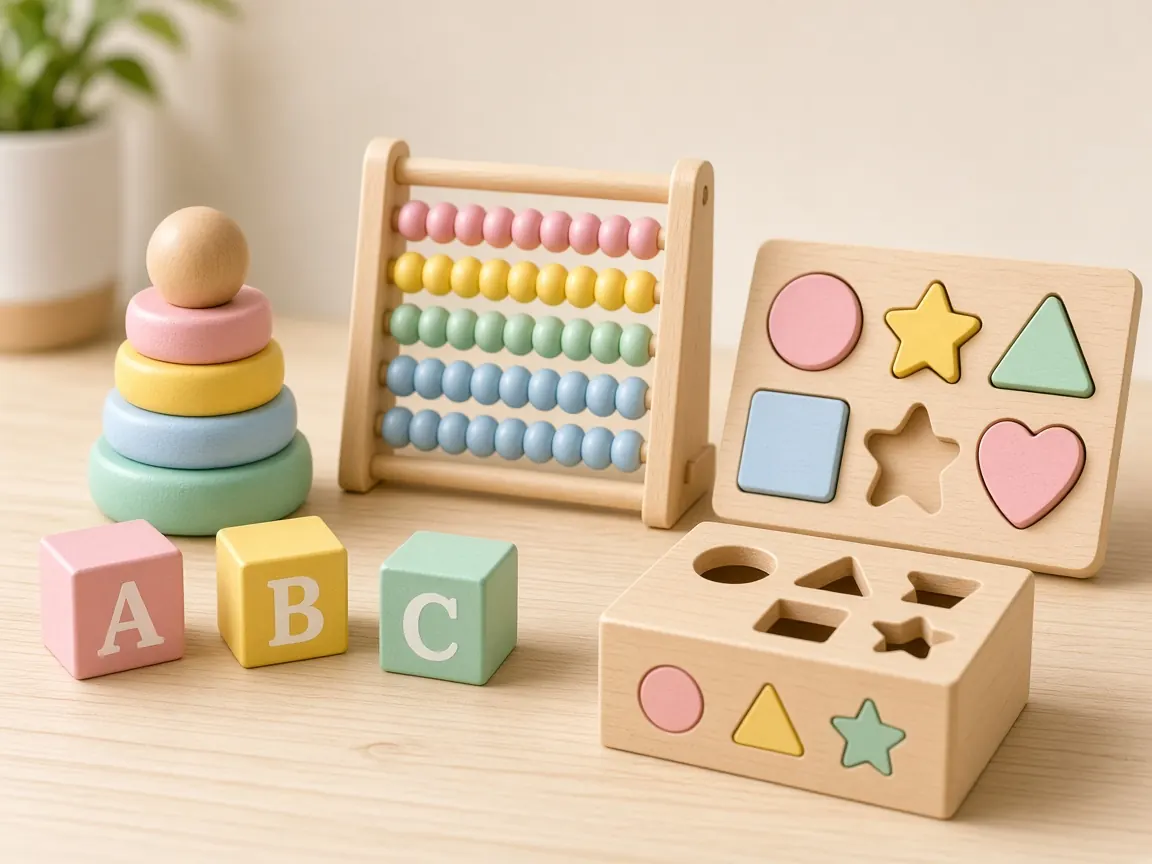
- Specially designed materials: many are self-correcting, so children can see for themselves whether they have completed a task correctly.
- Long work periods: children are given uninterrupted time to concentrate on their chosen activity.
- Mixed-age groups: younger children learn from older ones, and older children consolidate skills by helping.
- The teacher as guide: adults observe closely and introduce new materials when a child is ready.
Practical life and independence
A strong feature of Montessori classrooms is practical life activities such as pouring, sweeping, buttoning and preparing snacks. These build concentration, coordination and independence, and many children take great pride in doing real tasks for themselves.
How a play-based preschool works
In a play-based preschool, the day is organised around different kinds of play: free play, where children choose what to do, and guided play, where teachers set up activities with a learning goal in mind. The room is usually divided into areas for building, pretend play, art, books, sensory play and small-world toys, and a good part of the day is spent outdoors.
Teachers join in, ask open questions and extend children's ideas. A game of shop becomes a chance to count and use new words; building a tower becomes a lesson in balance and cooperation. Our guide to early math skills in preschool shows how much maths children can learn this way, without a worksheet in sight.
- Imagination and pretend play are central, from role play to storytelling.
- Social learning happens constantly, as children negotiate, share and solve problems together.
- Teacher-guided activities balance free play with planned learning experiences.
- Language-rich interaction is encouraged through conversation, songs and stories.
The difference between Montessori and play-based learning
The two approaches overlap more than people sometimes think. Both respect children's choices, value hands-on experience and avoid pushing formal academics too early. The main differences lie in how the environment is structured and how much weight is given to imaginative and social play.
- Materials: Montessori uses specific materials with defined purposes; play-based settings use open-ended toys and resources that can become anything.
- Pretend play: traditional Montessori classrooms place less emphasis on fantasy play; in play-based preschools it is a core activity.
- Working alone or together: Montessori often encourages individual, focused work; play-based learning puts more emphasis on group play and interaction.
- Role of the adult: Montessori teachers step back and observe; play-based teachers often join in and extend the play.
- Structure of the day: Montessori classrooms usually have long independent work periods; play-based days often move between free play, group activities and outdoor time.
Montessori pros and cons
Strengths
- Supports concentration, independence and self-care skills.
- Calm, orderly environments suit children who like predictability.
- Mixed-age groups encourage children to help and learn from each other.
Points to consider
- Less time for imaginative and group play than in many other settings.
- The quality of implementation varies, and the name alone does not tell you how well the approach is applied.
- Some very social or active children may prefer a busier, more playful environment.
Play-based preschool pros and cons
Strengths
- Strong focus on language, social skills and emotional development.
- Imaginative play supports creativity and problem solving.
- Flexible activities can follow children's interests as they change.
Points to consider
- Quality depends heavily on skilled teachers who know how to guide play towards learning.
- Parents sometimes find it harder to see what children are learning, so good communication matters.
- Children who crave quiet and order may need calm corners and routines within the busy day.
Which preschool approach is right for my child?
Start with your child rather than the method, because the same approach can suit one child and frustrate another. Think about how they play at home, how they react to busy rooms, whether they prefer working alone or with others, and what helps them feel secure. Then think about practical factors: location, hours, language and how the setting communicates with families.
- Watch how your child plays naturally for a week and note what absorbs them most.
- Visit settings during an ordinary part of the day, not only at an open event.
- Ask how a typical day is structured and how much time children spend outdoors.
- Ask how teachers support children's social skills, language and independence.
- Ask how you will hear about your child's progress and day-to-day life.
- Notice how relaxed and engaged the children seem, and how adults speak to them.
If language is also part of your decision, our guide to bilingual preschool in Kyrenia explains how Turkish and English usually work in local classrooms and what to ask on a visit.
How Altın Anahtar approaches learning
Altın Anahtar in Alsancak follows a play-based, child-centred approach. We plan activities around each child's interests and stage of development, and learning happens through play, discovery and hands-on experience. We are not a Montessori setting, and we would rather be clear about that than borrow a label.
Our preschool is for children aged 3 to 6, our nursery for children from 12 months to 3 years, and we are open Monday to Friday, 07:30 to 18:30. Teaching is in Turkish, with English built into the daily programme, and our team can talk with parents in English. The best way to see whether our approach suits your child is to visit; you can contact us to arrange an appointment.
Frequently asked questions
What is the main difference between Montessori and play-based preschool?
Montessori classrooms centre on specially designed materials and long periods of independent work, while play-based preschools put imaginative, social and teacher-guided play at the heart of learning. Both are child-centred and hands-on.
Is one approach better for school readiness?
Both can prepare children well for school when they are delivered by skilled teachers. School readiness depends on language, social skills, independence and curiosity as much as on early academics.
Can a preschool combine Montessori and play-based ideas?
Yes, many do. That is why visiting and asking how the day actually works is more useful than relying on a label.
Is Altın Anahtar a Montessori preschool?
No. Altın Anahtar follows a play-based, child-centred approach, with activities planned around children's interests and stage of development.
Can I visit before choosing?
Yes. Visits are by appointment, and our team can show you around in English.